
100 KVA UPS On Rent
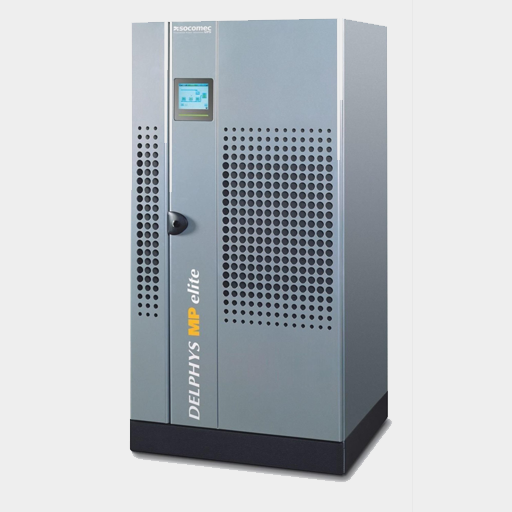
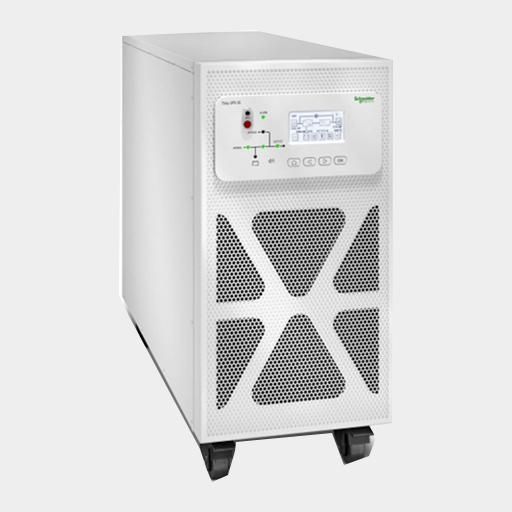
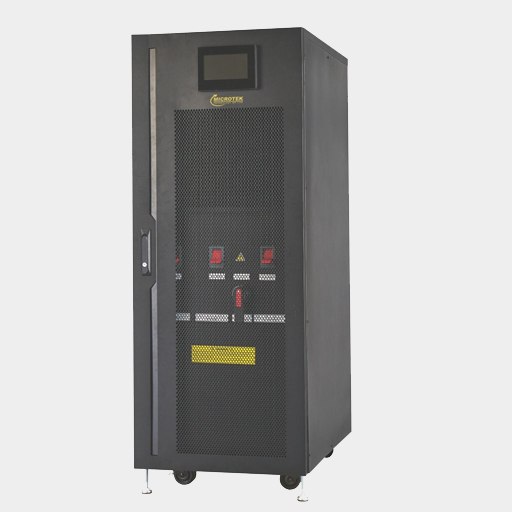
Ensure uninterrupted power for your operations with
Renting a 100 KVA UPS offers a powerful combination of financial, operational, and strategic benefits, particularly for large-scale operations in a city like Mumbai, where power reliability is crucial for business continuity. This capacity is typically needed for significant data centers, large industrial facilities, major hospitals, or extensive event setups.
Here's a breakdown of the key advantages:
1. Significant Cost Savings and Financial Flexibility:
- Avoid Substantial Capital Outlay:Purchasing a new 100 KVA UPS, along with its associated heavy-duty battery bank, installation, and commissioning, represents a multi-lakh to crore-rupee investment. Renting eliminates this massive upfront capital expenditure, allowing businesses to preserve their liquidity and allocate funds to core revenue-generating activities or other strategic investments.
- Operational Expense (OpEx) Advantage:Rental payments are classified as operating expenses, which can be fully tax-deductible in the current fiscal year. This simplifies financial planning and offers a more favorable tax treatment compared to a capital asset that depreciates over many years.
- Predictable Budgeting:Rental agreements typically involve fixed monthly or periodic payments, making budgeting predictable and easy. This eliminates the uncertainty of unexpected repair costs or the need for large lump-sum investments in maintenance or battery replacements.
- No Depreciation Concerns:You don't bear the financial burden of the asset's depreciation over time. The rental company manages this, ensuring you always have access to current technology without the financial hit of owning outdated equipment.
2. Unmatched Flexibility and Scalability:
- Adapt to Dynamic Power Needs:Business power requirements are rarely static. With a 100 KVA UPS rental, you can easily scale up or down your power protection capacity as your needs evolve – whether it's for a temporary surge in demand, a short-term project, or an evolving business expansion.
- Ideal for Large-Scale Temporary Applications:
- Major Events & Exhibitions:Conferences, concerts, product launches, or large trade shows in venues like the Jio World Centre or Bombay Exhibition Centre often require robust temporary power for lighting, sound, IT infrastructure, and more.
- Disaster Recovery Sites:Quick deployment of a powerful UPS is essential for setting up temporary disaster recovery or business continuity operations.
- Construction & Infrastructure Projects:Large temporary site offices, data collection points, or specialized equipment on long-term projects.
- Seasonal Peaks: Industries with seasonal demand fluctuations can rent extra capacity only when needed.
- No Long-Term Commitment:You're not tied to a piece of equipment that might become too small, too large, or technologically obsolete for your future needs.
3. Comprehensive Maintenance and Support (Included):
- Zero Maintenance Burden:This is a huge advantage for such large systems. The rental agreement almost always includes all routine maintenance, preventative servicing, and emergency repairs. This means no need for specialized in-house technicians, spare parts inventory, or costly service contracts.
- Battery Management Handled:Batteries are the most expensive consumable component of a UPS and have a limited lifespan. With a rental, the responsibility for monitoring, maintaining, and eventually replacing the massive battery bank (and its disposal) falls entirely on the rental provider, saving you significant recurring costs and environmental compliance efforts.
- 24/7 Technical Support & Rapid Response: Reputable rental companies provide round-the-clock technical support and often guarantee rapid on-site response in case of any issues. This minimizes potential downtime for your critical operations, which can be incredibly costly for a 100 KVA load.
- Expert Installation and Commissioning:Rental providers often include professional delivery, installation, integration, and initial testing of the UPS, ensuring it's set up correctly and safely from day one.
4. Access to Latest Technology and Enhanced Reliability:
- Avoid Technological Obsolescence:UPS technology is constantly improving in terms of efficiency, power density, and intelligent features. Renting allows you to utilize modern, energy-efficient 100 KVA UPS models with advanced monitoring and control capabilities, without the capital outlay of frequent upgrades.
- Well-Maintained, Branded Equipment: Reputable rental fleets consist of high-quality, regularly serviced UPS systems from leading manufacturers, ensuring maximum reliability and performance.
5. Robust Risk Mitigation and Business Continuity:
- Protection for Mission-Critical Loads: A 100 KVA UPS provides comprehensive protection against power outages, voltage fluctuations (sags, swells), surges, brownouts, and electrical noise. This is critical for safeguarding expensive equipment, preventing data loss, and ensuring the continuous operation of essential processes.
- Guaranteed Uptime:For businesses where even a few minutes of downtime can result in massive financial losses or safety hazards, renting a professionally maintained UPS provides a crucial layer of redundancy and peace of mind.
- Quick Deployment:In emergency situations, or when an immediate backup power solution is needed, rental services can often provide rapid delivery and installation, significantly reducing recovery time.
In the fast-paced business environment of Mumbai, where power reliability is paramount for large enterprises, renting a 100 KVA UPS is a highly practical and strategic decision that offers substantial financial benefits, operational flexibility, and robust power protection without the ownership headaches.
Technical Specification
A 100 kVA UPS (Uninterruptible Power Supply) is a high-power, critical infrastructure component designed to provide maximum power protection for very demanding loads. It's typically used in large data centers, industrial complexes, hospitals, and major commercial facilities.
Here's a brief technical specification overview:1. Power Rating:
- Apparent Power (kVA):100 kVA
- Real Power (kW):In most modern 100 kVA UPS systems, the output power factor is 1.0 (Unity Power Factor). This means 100 kVA equates directly to 100 kWof real power, indicating that the UPS can deliver its full apparent power as usable power to the load, maximizing efficiency and capacity utilization. Older designs might have a power factor of 0.8 or 0.9, meaning a 100 kVA UPS would provide 80 kW or 90 kW respectively.
2. Topology:
- Online Double Conversion (VFI - Voltage and Frequency Independent):This is the gold standard for high-capacity UPS systems. It ensures the highest level of power quality and protection. The incoming AC power is continuously converted to DC, which powers the inverter and charges the batteries. The inverter then converts the DC back to a perfectly stable, pure sine wave AC output, completely isolating the load from any incoming power disturbances (sags, swells, surges, noise, frequency variations).
3. Input Specifications:
- Nominal Input Voltage:Typically 380V / 400V / 415V AC, 3-phase (three-phase + neutral + ground).
- Input Voltage Range:A very wide acceptable input voltage window, often around ±15% to ±25% (e.g., 304V to 477V for a 400V nominal). This allows the UPS to operate on utility power without discharging batteries even during significant voltage fluctuations.
- Input Frequency:50 Hz or 60 Hz (auto-sensing capability is common).
- Input Frequency Range:A broad frequency tolerance, typically ±5% to ±10%.
- Input Power Factor:High, usually ≥0.99 at full load. This indicates excellent energy efficiency and minimal reactive power consumption from the utility, reducing energy bills and infrastructure strain.
- Input Current THD (Total Harmonic Distortion):Very low, typically ≤3% at full linear load. This minimizes the harmonics injected back into the grid, preventing interference with other equipment.
4. Output Specifications:
- Nominal Output Voltage:380V / 400V / 415V AC, 3-phase (three-phase + neutral + ground).
- Output Voltage Regulation (Static):Extremely tight, usually ±1% to ±1.5%, ensuring a highly precise and stable voltage supply to critical equipment.
- Output Frequency:50 Hz or 60 Hz (synchronizes to mains when available, with very high stability, e.g., ±0.05% in battery mode).
- Output Voltage THD:Very low, typically ≤2% for linear loads and ≤5% for non-linear loads. This guarantees clean power suitable for the most sensitive electronics.
- Overload Capacity:Robust, designed to handle temporary overloads (e.g., 110% for 60 minutes, 125% for 10 minutes, 150% for 1 minute). This is crucial for managing startup inrush currents or sudden load spikes.
- Crest Factor:Typically 3:1, indicating its ability to handle high peak currents common in modern IT equipment with switched-mode power supplies.
- Transfer Time (to Battery/Bypass): 0 ms (for online double conversion). The transfer is seamless, ensuring no interruption to the critical load.
5. Batteries & Runtime:
- Battery Type:Predominantly VRLA (Valve Regulated Lead-Acid) for maintenance-free operation. However, Lithium-ion batteries are increasingly offered as a premium option due to their longer lifespan (often 10+ years), faster charging, and smaller footprint, despite a higher initial cost.
- Nominal Battery Voltage:Varies by manufacturer and design, typically in the range of 360V DC to 480V DC or higher, configured from numerous individual battery blocks.
- Backup Time:Internal battery configurations are usually minimal (e.g., 5-15 minutes) at full load. For extended runtimes (30 minutes to several hours), external battery cabinets are almost always required and can be scaled to meet specific needs.
- Recharge Time:Generally 8-12 hours to reach 90% of capacity after a full discharge.
- Battery Management System (BMS):Advanced features include intelligent multi-stage charging, temperature compensation, automatic battery testing, and often individual battery string or block monitoring for optimal health and lifespan.
6. Efficiency:
- Online Mode Efficiency:Very high, often >96.5%, with some leading models reaching 97−98%. This translates into significant energy savings over the operational life of the UPS.
- ECO Mode (Economy Mode) Efficiency:Even higher, frequently >99%. In this mode, the UPS runs on bypass when utility power is stable, maximizing efficiency. It automatically switches to double conversion when power quality degrades. This mode offers maximum energy savings but may not be suitable for the absolute most sensitive loads or environments with very frequent power disturbances.
7. Physical & Environmental:
- Dimensions (H x W x D):Large, floor-standing cabinets. Dimensions vary significantly between models and whether batteries are internal or external, but they require dedicated space within an equipment room.
- Weight:Substantial, ranging from 200 kg to over 1000 kg, especially with internal batteries.
- Audible Noise:Typically 65-70 dBA at 1 meter. These units are designed for equipment rooms, not quiet office environments.
- Operating Temperature:0°C to 40°C (32°F to 104°F). Optimal battery life is usually at 20-25°C.
- Relative Humidity:0-95% non-condensing.
- IP Protection:Usually IP20 (protection against solid objects >12.5mm).
8. Communication & Management:
- Display: Comprehensive LCD or color touch screen interface for real-time status, alarms, and configuration.
- Communication Ports:Standard ports include RS232, USB, Dry Contacts (for basic alarm integration), and EPO (Emergency Power Off).
- Communication Slots: For optional network cards such as SNMP (for remote monitoring and control over IP networks), Modbus (for integration with Building Management Systems - BMS), and relay cards.
- Software:Bundled shutdown and monitoring software for operating systems.
- Parallel Capability:Most 100 kVA UPS systems support parallel operation for redundancy (e.g., N+1 configuration for increased reliability) or for increasing total capacity beyond a single unit's rating.
These specifications underline that a 100 kVA UPS is a sophisticated piece of power electronics, crucial for maintaining uptime in demanding environments.